 March 30, 2026
 Monday Motivation
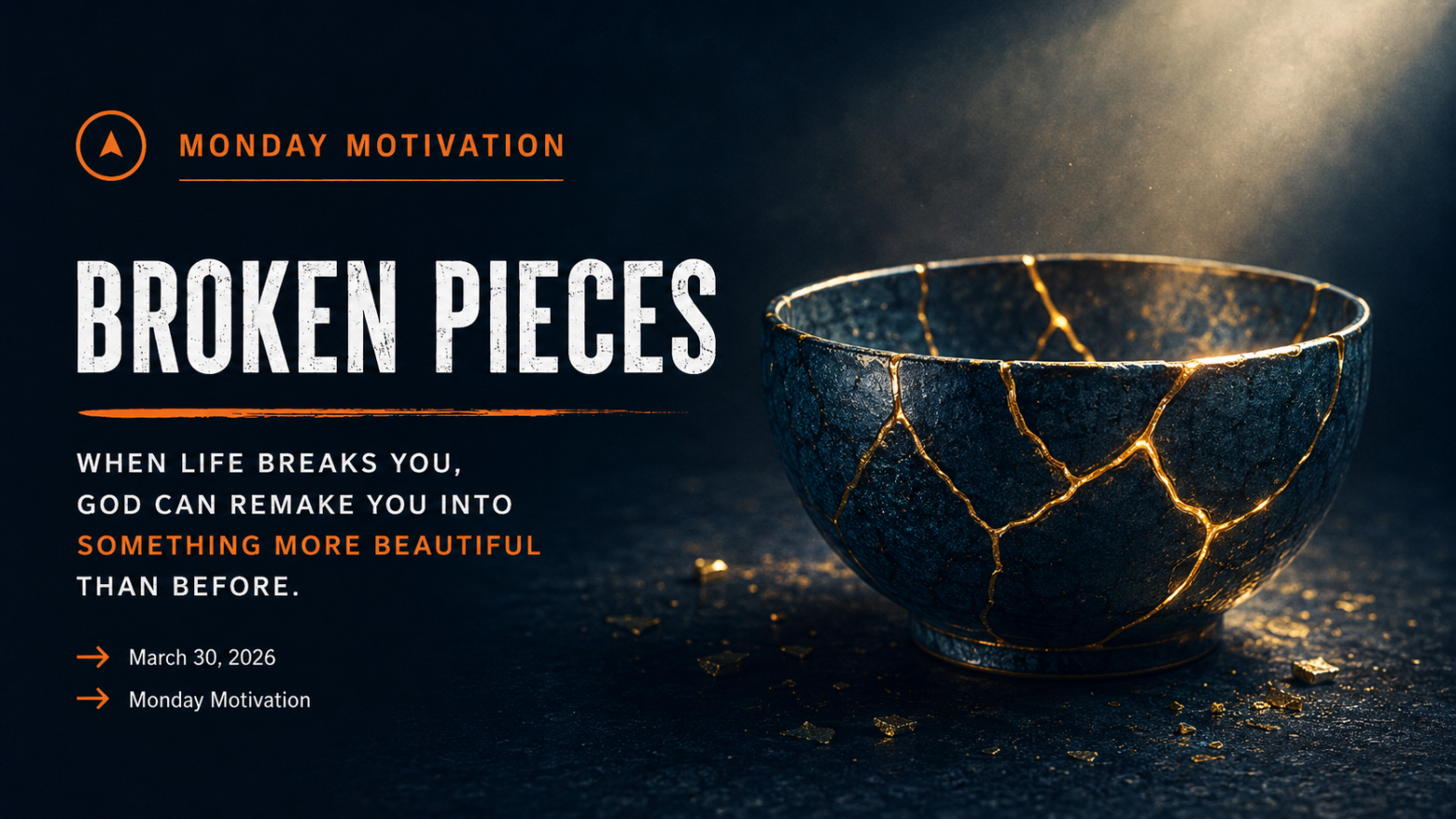
In Japan, there is an art form called Kintsugi. When a vessel breaks, Kintsugi does not try to hide the damage. It does not pretend the cracks never happened. Instead, it fills those fractures with gold, tracing beauty through every break rather than concealing it. The broken places become the most beautiful part of the piece.
The concept teaches that what has been shattered does not need to be thrown away but instead can be remade into something more beautiful than before. What was once shattered becomes more valuable than before.
This is a great lesson about life, because sometimes life will break you. At some point, every person experiences fracture: a relationship ends, a dream fades, failure shakes your confidence, pressures mount, or pain seems unbearable.
Unfortunately, we are taught to hide these things. We live with shame and guilt, and then we try to glue ourselves back together quietly and pretend we were never broken. We attempt to present strength to the world instead of living in truth.
But no matter how hard we try to be strong, the hidden cracks still exist. Pretending you are whole does not heal you.
Kintsugi teaches a different way to address breaks and cracks by acknowledging the break and restoring it with intention.
The reality is that healing is not about going back to who you were, because that version of you no longer exists. Whenever we go through healing, we are becoming someone new.
Please understand, the cracks and pains in your life are not proof of weakness, nor are they the end of your usefulness. They are places where something deeper can be formed. Our pride is replaced with humility, and our indifference is replaced with empathy. The world may admire perfection, but in reality, no one is perfect.
Brokenness often whispers a lie: “You’re finished.”
The concept of Kintsugi answers: “You’re being remade.”
There is a difference between being destroyed and being
reshaped. A shattered life is not a wasted life. In fact, some of the most meaningful, impactful, and beautiful lives are those that have been broken and restored with care.
Think of John Newton, who once was a slave trader, later repented, became a pastor and abolitionist, and wrote the hymn “Amazing Grace.”
Think of Abraham Lincoln, who faced repeated political defeats, personal loss, and deep depression, yet became one of the most respected leaders in history.
Or think of Helen Keller, who lost both sight and hearing as a child, yet became a global symbol of perseverance and human potential.
Each one was reshaped.
The bottom line is this: you do not need to erase your story to move forward. You simply need to redeem it.
At Easter, we remember that brokenness did not have the final word. A body was broken, hope seemed shattered, and darkness appeared to win. But out of that brokenness came resurrection.
Jesus declares this truth: what is broken can be made new, not just repaired, but redeemed.
So quit despising your cracks, failures, and defeats, and realize that through Christ, He can take those events and make you into something new. Where Kintsugi fills cracks with gold, Christ fills them with grace. Where we see fractures, He sees places for glory to dwell. He does not discard the shattered vessel. He redeems it, reshapes it, and breathes life into it again.
Remember, your scars might remain, but not as shame. They become a testimony for the world to see that in the hands of God, even the deepest fractures become vessels of light.
Practical reflections for pastors and leaders who want to build healthier people, ministries, and organizations.
Explore all Articles →

Short, practical reflections every Monday to help leaders think clearly, lead faithfully, and live with character.
View all Monday Motivation →Invite Dan to speak, coach, or consult with your organization.
Contact Dan