 August 10, 2026
 Monday Motivation
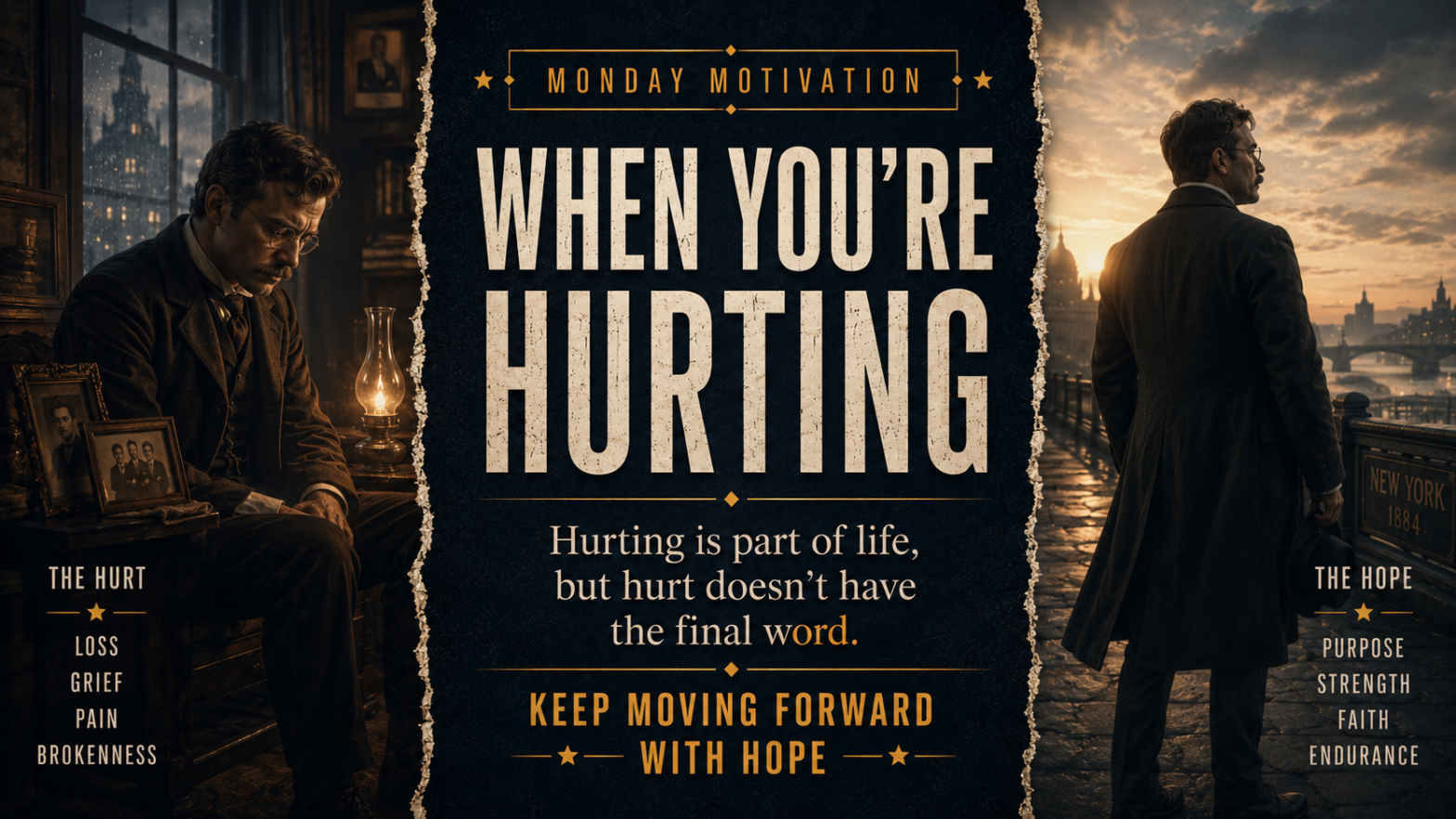
On February 14, 1884, Theodore Roosevelt lived through a day almost impossible to imagine. His mother, Mittie, died of typhoid fever in the family home in New York City. Just hours later, under the same roof, his 22-year-old wife, Alice, died from complications after giving birth to their daughter. Roosevelt was only 25 years old.
That night, he opened his diary, drew a large black X across the page, and wrote: “The light has gone out of my life.”
Some hurts are too deep for easy answers.
Hurts come in many forms. Someone dies. A relationship ends. A friend is no longer there. A diagnosis changes everything. A dream falls apart. Someone you trusted betrays you. You lose a job. The phone rings with news you never wanted to hear. Or you find yourself carrying a burden that no one else seems to understand.
The pain is real, and sometimes the hurt can feel unbearable. When you’re hurting like that, the first goal isn’t always to feel better. Sometimes the first goal is simply to keep going.
Roosevelt was devastated, but his story didn’t end on that Valentine day. In the years ahead, he would serve as governor of New York, vice president, and eventually the 26th president of the United States. He thought the light had gone out of his life but eventually discovered something important: darkness can be part of your story without becoming the end of your story.
Hurting is part of life but hurt doesn’t have to have the final word.
So, what do you do when you’re hurting?
First, be honest. Roosevelt didn’t pretend he was okay. His diary reveals exactly how broken he felt. There is no strength in denying reality. If it hurts, admit that it hurts. If you’re disappointed, acknowledge it. If you’re grieving, grieve. If someone wounded you, don’t pretend it didn’t matter.
We can spend so much energy trying to convince everyone else that we’re okay that we never deal with the fact that we’re not. We bury the pain, put on a smile, and hope it eventually disappears. Buried pain usually doesn’t disappear. It simply finds another way to surface.
Healing always begins with honesty. You can’t properly treat a wound you refuse to admit exists.
Second, keep moving. Pain has a way of telling us to stop. Stop trying. Stop trusting. Stop showing up. Stop caring. And while there are certainly times when we need to rest, there is an important difference between resting and quitting.
When you’re hurting, you may not be able to run. That’s okay. Walk. And if you can’t walk very far, take one step. Isaiah 40:31 reminds us sometimes we soar, sometimes we run, but sometimes we simply take one step at a time.
Move. Get up and go to work. Make the phone call. Go to church. Have lunch with someone who cares about you. Finish the task in front of you. Keep some normal routines in your life even when nothing feels normal. Missionary and author Elisabeth Elliot gave the wise advice when life became overwhelming: “Do the next thing.” Sometimes you survive the hardest seasons of life one ordinary step at a time. You don’t have to figure out your entire future today. You only need enough courage for the next step. Then tomorrow, take another one.
Never underestimate the power of small steps taken during difficult seasons. You may not feel like you’re making progress, but every step forward is a reminder that pain hasn’t stopped you.
Some days you’ll conquer. Some days you’ll simply survive. Both days count.
Third, look for purpose. When we’re hurting, our first prayer is often, “God, make this stop.” But maybe there’s another prayer worth praying: “God, don’t waste this.”
Some of the most compassionate people you will ever meet became compassionate because they remember what it felt like to hurt. Some of the strongest people became strong because life gave them something heavy to carry. Some of the people with the deepest faith developed that faith in seasons when they had nothing else to hold onto.
You may not have chosen what happened to you, but you still have a choice about how you deal with it. You can find purpose in what is happening to you. God does not waste our tears.
Fourth, don’t lose hope. Hurt should never remove our hope.
On that sad day, Roosevelt couldn’t see what was ahead of him. He couldn’t see the presidency. He couldn’t see the family he would continue to raise. He couldn’t see the people he would influence, the friendships he would build, or the years still waiting for him.
A terrible chapter doesn’t mean it is the final chapter. Hold on to hope.
Theodore Roosevelt wrote, “The light has gone out of my life.” But it wasn’t the end. He couldn’t see the life still ahead of him. So don’t quit in the dark. Hold on to hope. Why? There is still purpose ahead of you. There are still people who need you. There are still prayers God will answer, moments you will treasure, and days you’ll be thankful you stayed faithful.
You may not see the light today, but that doesn’t mean it’s gone.
Keep moving forward with hope. There are still good chapters ahead.
Practical reflections for pastors and leaders who want to build healthier people, ministries, and organizations.
Explore all Articles →

Short, practical reflections every Monday to help leaders think clearly, lead faithfully, and live with character.
View all Monday Motivation →Invite Dan to speak, coach, or consult with your organization.
Contact Dan