 September 21, 2026
 Monday Motivation
She walked away at sixteen years old. By then, Alysa Liu had already reached a level in figure skating that most people could only dream of achieving. At thirteen, she became the youngest woman ever to win the U.S. Figure Skating Championships. At fourteen, she won again. She had talent, recognition, and a future in the sport that seemed almost limitless.
People told her she was born for this. And still, at sixteen, she walked away.
Not because she wasn’t talented enough. Not because someone told her she couldn’t continue. She walked away because somewhere along the journey, skating had stopped being something she loved and had become something she was expected to do.
Everything in her life revolved around a schedule. Her training, her diet, her recovery, and her competitions; nearly every waking hour was organized around becoming better on the ice. She was performing at the highest level of her sport, yet at the same time, she felt as though she was losing herself.
The sport that had given her so much was beginning to take something from her.
So, she left.
Some people told her she was making a mistake. They wondered what she would do without skating and if she would regret walking away from something she had spent most of her life building.
But Liu moved on. For nearly two years, she lived differently. She went to college, traveled, spent time with friends, and experienced a life that did not revolve around the next practice or competition. She enjoyed life.
Then something unexpected happened.
She missed skating. She missed the ice. She missed training. She even missed competing. So, she came back.
But there was one enormous difference between the girl who walked away and the young woman who returned:
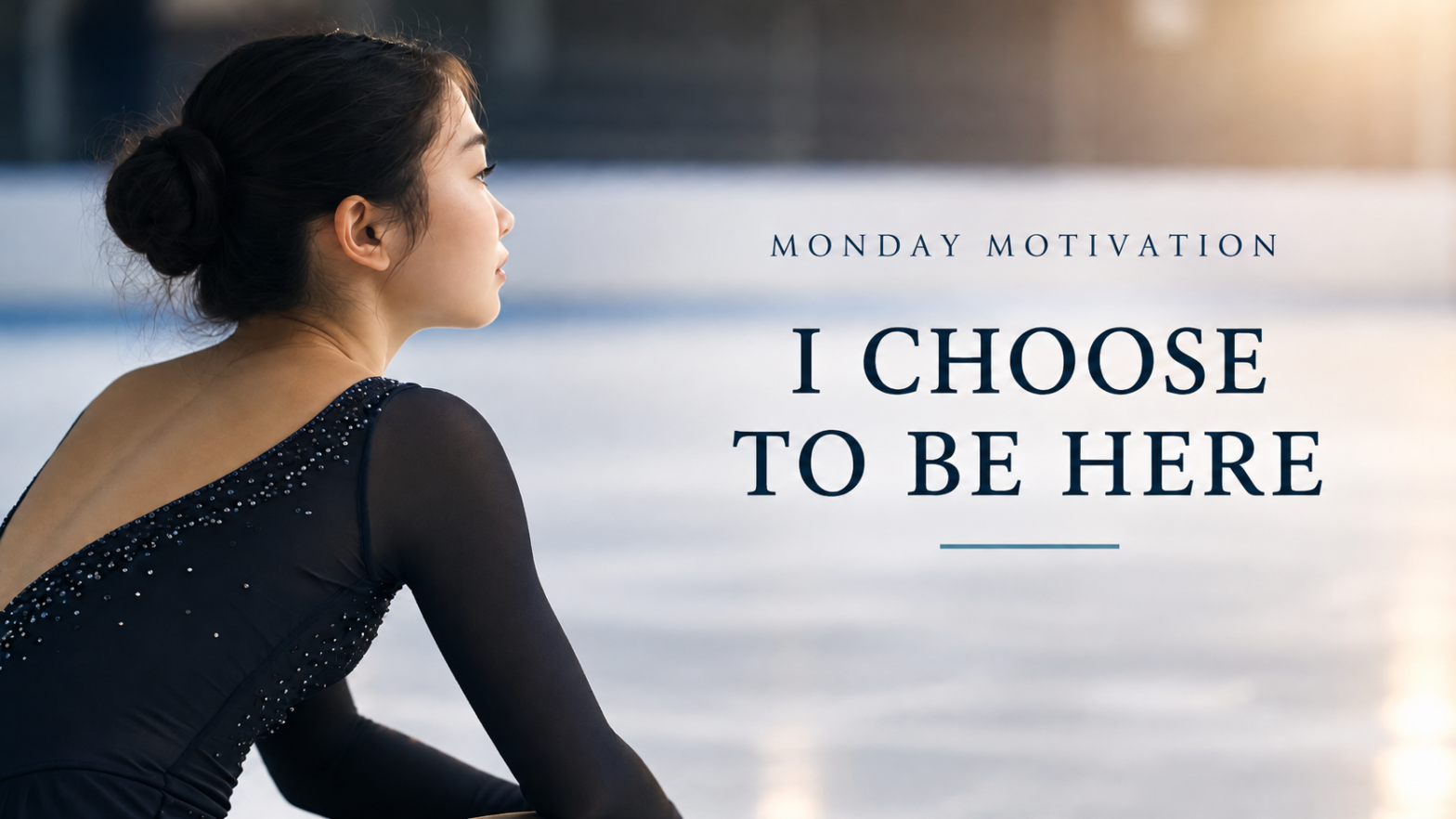
This time, she chose to be there.
She wasn’t skating simply because it was the life others had planned for her. She wasn’t skating because people expected her to compete or expected her to win. She was there because she wanted to be there. She chose to compete. And that changed everything.
Eventually, she reached the top of her sport again, winning two gold medals at the 2026 Winter Olympics. But perhaps more important than what she accomplished was the perspective she brought with her.
Her perspective was given in an interview, when she said, “I choose to be here. I loved being able to come back and choose my own destiny.”
Her attitude could be summed up in one simple idea: I choose to be here.
There is tremendous power in those words.
The circumstances may look exactly the same from the outside. The alarm still goes off early. The training is still difficult. The work still has to be done. There are still sacrifices, disappointments, pressure, and days when motivation disappears.
But there is a profound difference between saying, “I have to be here,” and saying, “I choose to be here.”
One creates resentment. The other creates purpose.
And that lesson extends far beyond figure skating.
We choose a career, and eventually we complain that we have to go to work.
We choose to start a business, and eventually we complain that we have to deal with customers.
We choose to become healthier, and eventually we complain that we have to exercise.
We choose a relationship, a goal, a team, a project, or a dream and somewhere along the way, “I get to do this” quietly becomes “I have to do this.”
Nothing about the activity changed, but our perspective did.
That shift happens slowly. What once felt like an opportunity begins to feel like an obligation. What we once prayed for becomes something we complain about. What we once pursued enthusiastically becomes something we simply endure. And when that happens, sometimes the answer isn’t to quit. Sometimes the answer is to remember why we chose it in the first place.
The important question we need to ask is whether we are living deliberately or simply moving through a life we no longer remember choosing. Living deliberately is liberating.
So, choose the work.
Choose the preparation.
Choose the uncomfortable days.
Choose to show up when nobody is applauding.
Choose to give your best even when motivation isn’t there.
And if something truly matters to you, stop saying, “I have to do this.” Say, “I choose this.”
When Alysa Liu returned to skating, the ice hadn’t changed. The early mornings hadn’t changed. The training hadn’t become easy. The pressure hadn’t disappeared. She had changed. She returned knowing why she was there.
We need to regularly examine the life we are building and ask whether the things consuming our time still deserve our commitment. If not, either walk away or change your attitude.
Because a meaningful life isn’t created by avoiding difficult things. It is created by knowing which difficult things are worth choosing.
Tomorrow, the alarm will still ring. The work will still be waiting. The difficult conversation, the workout, the practice, the responsibility, and the goal will all still be there. The only question is how we will meet them.
I have to be here.
Or
I choose to be here.
Changing those five words will not change what is in front of us, but it will change the person who shows up to face it.
Practical reflections for pastors and leaders who want to build healthier people, ministries, and organizations.
Explore all Articles →

Short, practical reflections every Monday to help leaders think clearly, lead faithfully, and live with character.
View all Monday Motivation →Invite Dan to speak, coach, or consult with your organization.
Contact Dan