 April 13, 2026
 Monday Motivation
Friends are important because they help you grow and find meaning, but some people are not true friends. Some will try to pressure us in order to control our decisions. They are the ones who will bring you down emotionally. We call them controllers, manipulators, or schemers.
Why do we let them manipulate us? It is not because we are weak, but because we don’t want to disappoint anyone. We don’t want conflict. We don’t want to be seen as selfish or difficult. We simply want to keep the peace. So, we say “yes” even when everything inside us is saying “no.”
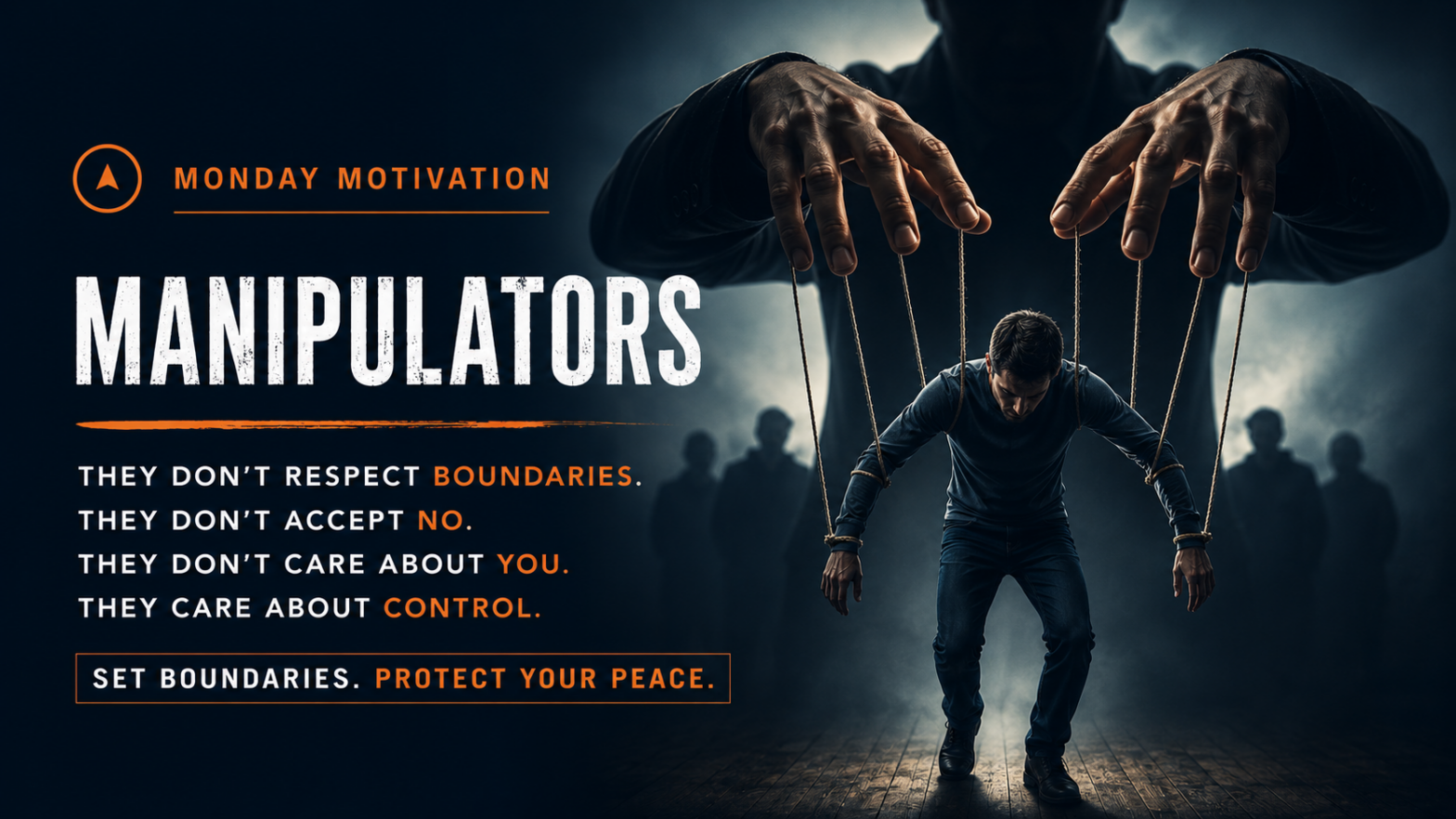
Christian psychologist, Henry Cloud, warns there are certain people, who thrive on controlling us because they don’t respect boundaries. They don’t care about others and feel superior to them. Instead of asking, they pressure you. Instead of accepting your answer, they try to change it. They are the puppet masters pulling our strings, making us do what they want us to do and not what we want to do. How do they do it?
People who manipulate others tend to use the same playbook. The first time it doesn’t seem like a big deal but over time we realize we’re not really making our own choices anymore.
First, they use guilt. They make us feel like we are a bad person for saying no, as if we are letting them or the organization down, or we don’t care enough. Sometimes they twist things we say and make us question ourselves. They will sarcastically belittle our self-worth and as we leave, we start thinking, “Wait…was I wrong?”
Second, there is a sense of urgency. Manipulators act like everything must be done now and we must respond immediately. Because of the urgency, we don’t have time to think it through or to process it. We must trust them that it is urgent, but can we? Urgency is their weapon to force us to “trust” them.
Third, is repetition. They ask again and again. We get tired of saying no and we finally agree because we are tired.
Someone who is constantly asking us to do something when we’ve said “no” does not respect us. They are pressuring us and that pressure will grow if we are constantly around them, because we begin to think their behavior is normal.
But the truth is we are not obligated to do what someone else is manipulating us to do. We are not responsible for everyone else’s emotions, expectations, or reactions. We are only responsible for our own choices, and sometimes the right choice is simply saying no.
This is a struggle for many because saying no feels wrong and it feels uncomfortable. We start overthinking, “What if they get mad?” “What if they think I’m a bad person?” “What if I am hurting the team, the family, or the organization?”
But saying “yes” when we don’t mean it is worse. Every time we do that, we’re putting other people in control of our time, our energy, and our life.
We get frustrated. We become tired. We feel resentment, and we start feeling stuck. Not because we don’t have control, but because we keep giving it away. We need to set boundaries. Setting boundaries doesn’t mean you don’t care about people. It means you care about yourself, as well.
Healthy people understand boundaries. They respect them. They don’t pressure you, argue with you, or try to wear you down.
At the end of the day, we teach people how to treat us by what we allow. If we always give in, they’ll expect it. But when we begin to stand our ground, things start to change.
So, this week, pay attention to your choices. Know the difference between the friend who wants you to do something and the manipulator who is manipulating you.
Before you say “yes,” pause. Ask yourself one simple question:
Do I really want to do this, or am I just feeling pressured?
That one question can save you from a lot of frustration.
You don’t need to live your life trying to keep everyone else happy. You don’t need to do things just to avoid a little discomfort. You don’t have to agree to things that go against what you know is right for you.
You have a choice.
And sometimes the most powerful thing you can say is one simple word: no.
Practical reflections for pastors and leaders who want to build healthier people, ministries, and organizations.
Explore all Articles →

Short, practical reflections every Monday to help leaders think clearly, lead faithfully, and live with character.
View all Monday Motivation →Invite Dan to speak, coach, or consult with your organization.
Contact Dan