 June 8, 2026
 Monday Motivation
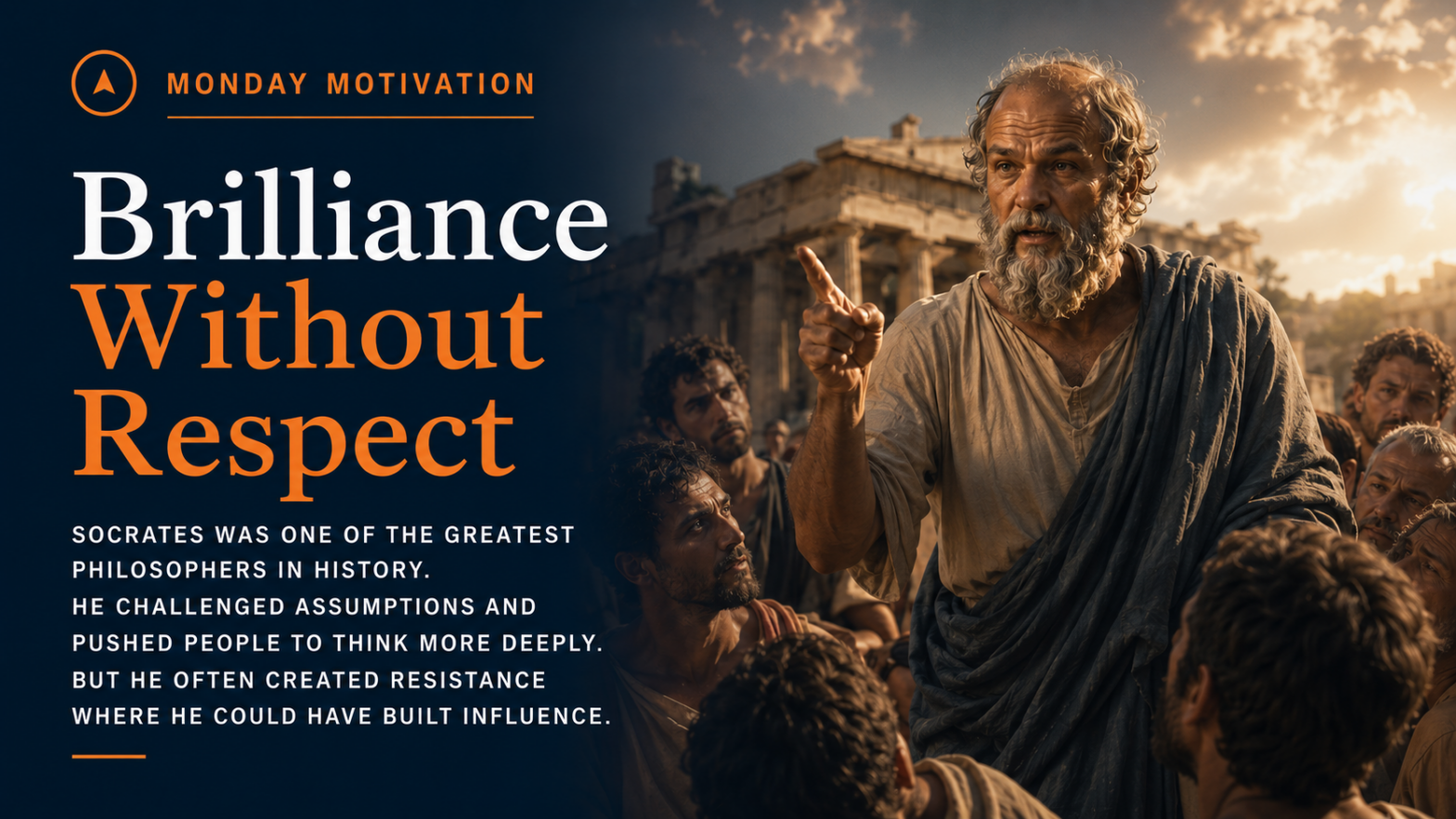
Socrates was one of the greatest philosophers in history. He became famous for the Socratic method, a relentless practice of asking questions that challenged assumptions and forced people to think more deeply. He questioned government, parenting, tradition, and public opinion. His brilliance touched every subject he encountered. But brilliance alone did not make him beloved. Many people felt exposed, criticized, or embarrassed by his questioning. He had a gift for uncovering weak thinking, but he did not always have the gift of making people feel respected while he did it. The result was that he often created resistance where he could have built influence.
Eventually he was put on trial in Athens on charges of impiety and corrupting the youth because he questioned everything. He was found guilty by a narrow margin. Under Athenian law, the prosecution and the defendant could each propose a penalty. The prosecution asked for death. Socrates could have proposed exile or a fine, and many historians believe the jury likely would have accepted one of those options. Instead, he suggested that he deserved public honor and free meals at the Prytaneum, a reward reserved for exceptional benefactors of the city. What may have sounded good to him sounded arrogant to many jurors. The jury, by a large majority, responded by sentencing him to death. Author Ryan Holiday stated, “Socrates was one of the smartest men in the world but couldn’t read the room.”
That is a warning to all of us. A person can be intellectually gifted and still lose because he is emotionally disconnected. Knowledge without people skills is dangerous. Titles without tact are dangerous. High IQ without emotional intelligence is dangerous. History is filled with brilliant people who mistook admiration for connection, intellect for influence, and certainty for wisdom. While their minds soared, their relationships suffered. Isaac Newton, Nikola Tesla, Robert Oppenheimer, and Douglas MacArthur all achieved extraordinary things, yet each also faced conflicts that were made worse by difficulties in reading people and managing relationships.
So, this week, do not focus only on being the smartest person in the room. Develop the ability to see what other people see. Look through their eyes. What sounds confident to you may sound dismissive to them. What feels funny to you may feel hurtful to them. What seems obvious to you may feel threatening to someone else. Before you speak, ask yourself: What is this person feeling? What does this moment require? What outcome do I want? The strongest leaders do not simply speak truth. They speak truth in a way that people are ready to receive. Learning to read people is not manipulation. It is wisdom, empathy, timing, and self-awareness working together.
Practical reflections for pastors and leaders who want to build healthier people, ministries, and organizations.
Explore all Articles →

Short, practical reflections every Monday to help leaders think clearly, lead faithfully, and live with character.
View all Monday Motivation →Invite Dan to speak, coach, or consult with your organization.
Contact Dan